

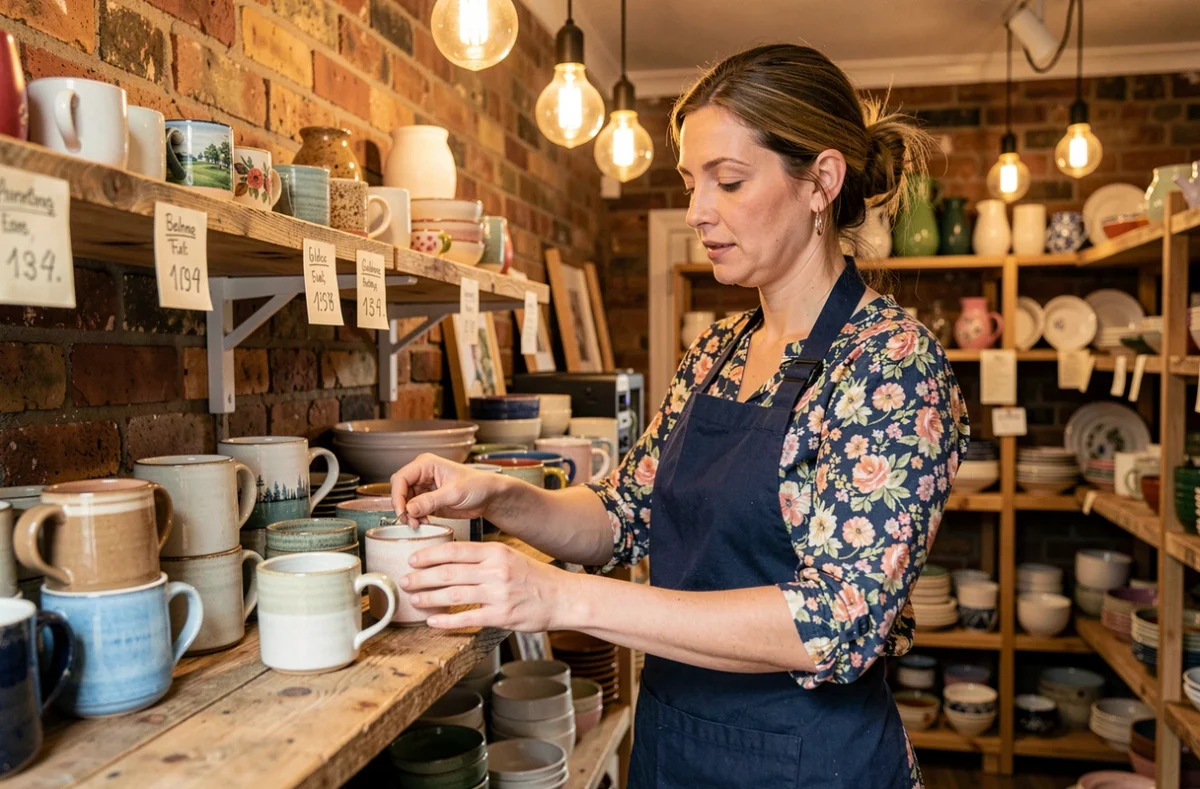
Measuring the health of British retail by counting shop closures misses most of the story. The more revealing metric is what replaces a closed unit, and how quickly. Across England and Scotland, councils, landlords and independent operators are testing mechanisms that turn vacancy from a symptom of decline into a catalyst for different kinds of activity on the high street.
High Street Rental Auctions and vacancy data in England
The most concrete policy shift for empty shops in England is the High Street Rental Auction. Councils can compel landlords of qualifying commercial properties, vacant for at least a year, to offer them to prospective tenants through an auction process. This is not a subsidy or a grant. It directly intervenes in the landlord-tenant relationship by removing the option of indefinite vacancy.
Further reading: Innovation in British agriculture: the rise of sustainable farming practices
Bassetlaw Council reported that more than 30 shops had been let or were under offer through the policy, according to the BBC. The mechanism matters because it targets a specific failure: landlords holding empty units off the market, whether for speculative reasons or simple inertia.
For businesses looking to test a physical presence without committing to long leases, the auction format lowers the barrier. It also shifts the calculus for landlords: leaving a unit empty for years now carries a procedural cost, not just a financial one.
Further reading: Brexit aftermath: economic implications for UK businesses in 2026
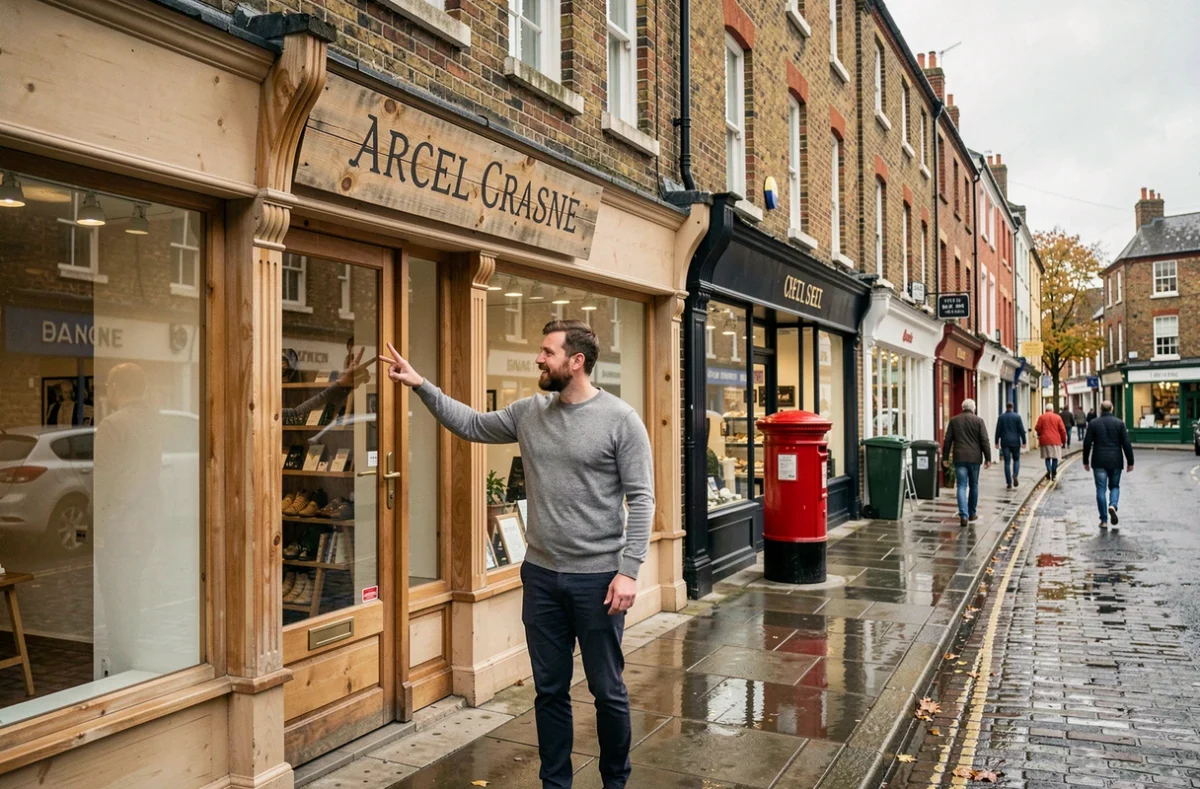
Business rates: the tax burden shaping retail decisions
No analysis of high street reinvention makes sense without examining business rates, the single most cited obstacle by retailers of every size.
The pressure is not abstract. John Lewis has publicly urged the Chancellor to address the rates burden. B&Q and Screwfix’s chief executive made a similar call, specifically asking for a cut ahead of the Budget. The Entertainer and jeweller Boodles have both backed a proposed online sales levy designed to fund a reduction in business rates for physical stores.
| Retailer or body | Position on business rates |
|---|---|
| British Retail Consortium | Calls for reform of business rates for physical retail |
| John Lewis | Urged Chancellor to reduce rates burden |
| B&Q / Screwfix CEO | Called for a rates cut ahead of the Budget |
| The Entertainer / Boodles | Back an online sales levy to fund rates reduction |
| Treasury | Rejected an online-sales-tax proposal |
The Treasury rejected the online-sales-tax proposal, which complicates the picture. An online levy could also penalise multichannel retailers who operate both stores and websites. The debate is shifting from whether rates are too high (broadly agreed) to who should subsidise the cost of maintaining a physical presence.
Why rates matter more than rent for independents
For a small independent retailer, business rates can represent a larger fixed cost than rent itself, particularly in town centres where rateable values have not kept pace with falling footfall. A shop generating modest revenue still faces a rates bill calculated on historic property valuations. This asymmetry penalises exactly the kind of businesses that councils want to attract into empty units.
Aberdeen’s Union Street: repurposing beyond retail
Aberdeen offers a useful case study in how a high street can be reimagined rather than simply restocked. A council-backed initiative on Union Street combined efforts to let empty units with plans for an indoor food market, seafront redevelopment and greater use of upper floors for housing and services.
The BBC reported that 33 of 57 previously empty units on Union Street had been filled, with another 14 in the process of being let. The mix of new occupants is telling. Rather than waiting for traditional retailers to return, the strategy deliberately incorporates culture, leisure, health and residential uses.
- Upper floors converted to housing or health services, generating footfall outside standard shopping hours
- An indoor food market planned as an anchor for the street, drawing visitors who might then browse adjacent shops
- Seafront redevelopment linked to the retail corridor, treating the high street as part of a wider destination rather than an isolated strip
This approach accepts a premise that pure retail monocultures on high streets are finished. The replacement model is mixed-use, where shops sit alongside clinics, flats, co-working spaces and food venues. The diversity of uses creates more resilient footfall because it does not depend on a single reason for people to visit.

What independent retailers need from a reinvented high street
The BRC noted that footfall continues to drop, and called on the Budget to deliver for shoppers. Falling footfall is the context in which independents must operate. Filling empty units is a necessary first step, but sustained footfall depends on the mix of uses around each shop, not on the shop alone.
Independent businesses thrive when they are part of a cluster. A single boutique on a street of empty units struggles regardless of product quality. A boutique next to a popular cafe, a physiotherapy clinic and a small grocery attracts passing trade from each neighbour’s customers. This is the logic behind Aberdeen’s mixed-use approach and behind rental auctions that prioritise occupancy over maximum rent.
- Rental auctions reduce vacancy periods, giving new tenants neighbouring businesses rather than shuttered fronts
- Mixed-use conversions create footfall from residents, patients and diners who would not otherwise visit the street
- Rates reform, if it materialises, would lower the fixed-cost floor that currently prices out smaller operators
- Local food markets and cultural venues act as anchors, drawing regular visitors throughout the week
The high street that emerges from this period will look different from the one that preceded it. The shift is measurable: fewer chain fashion retailers per street, more food and drink operators, more service businesses, more residential above ground level. Whether that constitutes survival or reinvention depends on what you thought the high street was for. The data from Aberdeen and Bassetlaw suggests that filling units with varied uses works faster than waiting for retail to recover on its own.