

The National Tutoring Programme ended in 2024, and schools across the UK have since scaled back their tutoring offer. What followed was predictable: families turned to private online platforms to fill the gap. By 2026, online tutoring services in the UK operate in a market shaped less by government intervention and more by commercial platforms competing for parental spend. The shift raises practical questions about quality, safeguarding and whether wider access to online tutors actually translates into better learning outcomes.
Safeguarding checks for online tutors: what changed in 2026
One regulatory development worth noting is that self-employed tutors in England and Wales gained a new route to apply for Enhanced DBS checks in 2026. This matters because, previously, independent tutors outside of agencies often struggled to obtain the same level of vetting that schools require of their staff.
Recommended read: Financial services in the UK: Ensuring your business thrives in 2026
The change is narrower than it sounds. It applies specifically to England and Wales, not uniformly across the UK. Scotland and Northern Ireland operate under separate disclosure frameworks, so DBS rules differ across the four nations. Any parent in Glasgow or Belfast reading a London-based platform’s safeguarding page should check whether the checks described actually apply in their jurisdiction.
Even within England and Wales, the new route is an option, not a legal obligation. No law compels every private tutor to hold an Enhanced DBS check. Platforms that advertise “all tutors DBS-checked” are describing their own internal policy, not a regulatory baseline. The distinction is significant when comparing services.
Read also: The rise of home care services in the UK: A look into 2026
Online tutoring platforms and the access question
The core selling point of online tutoring is geographical reach. A student in rural Cumbria can, in theory, access the same specialist maths tutor as a student in central London. Platforms repeat this claim constantly, and it holds at a surface level: the technology removes the constraint of physical proximity.

Dig deeper and the picture is less tidy. Research consistently flags a persistent gap in tutoring access linked to household income and region. Online delivery removes one barrier (distance) while leaving others untouched. A family that cannot afford the hourly rate, or that lacks reliable broadband, gains nothing from a wider tutor pool.
Access to a platform does not equal access to tutoring. The subscription or per-session cost, the quality of the household’s internet connection, and whether a child has a quiet space to learn all mediate the real-world benefit. Platforms rarely publish data on the socioeconomic profile of their users, which makes it difficult to assess whether online tutoring narrows or widens existing educational disparities.
What the post-NTP landscape looks like
When the National Tutoring Programme was active, it channelled subsidised tutoring towards disadvantaged pupils in state schools. Its end shifted the financial burden back to families. Schools that had relied on NTP funding reduced their tutoring provision, and families now largely fund tutoring privately.
This context matters for any 2026 market overview. The growth in online tutoring services is not driven purely by technological progress or parental enthusiasm. It is partly a response to a policy vacuum, with commercial providers stepping into space the government vacated.
AI tutoring in UK schools: ambition versus evidence
Several platforms now integrate AI-driven features, from adaptive question banks to fully automated one-to-one sessions. Government interest in AI tutoring has moved towards school pilots, signalling a policy direction that treats AI as a potential supplement to human tutors.
The gap between ambition and proof is wide. Evidence on AI tutoring’s impact is not yet established. Pilot programmes are under way, but published outcome data remains limited. For schools weighing whether to invest in an AI tutoring tool or hire a human tutor, the decision currently rests more on cost and convenience than on robust effectiveness data.
This is not a criticism of the technology itself. It is a factual limitation that buyers should factor in. When a platform claims its AI tutor “personalises learning in real time,” the question worth asking is: compared to what baseline, and measured how?
What to look for when evaluating AI claims
- Whether the platform publishes independently verified outcome data, not just internal metrics or testimonials
- Whether the AI component supplements a human tutor or replaces one entirely, since the pedagogical implications differ
- Whether the adaptive algorithm has been tested with UK curriculum content specifically, rather than imported from another education system
Choosing an online tutoring service: the checks that matter
Most comparison guides rank platforms by price, subject range and user reviews. Those criteria are reasonable starting points, but they skip the questions that separate a reliable service from a polished website.
- Tutor vetting: does the platform require Enhanced DBS checks (or the equivalent in Scotland and Northern Ireland), and does it verify them independently or rely on tutor self-declaration?
- Progress reporting: can the school or parent access structured reports on what was covered, how the pupil responded, and what the tutor recommends next?
- Curriculum alignment: is the tutoring mapped to the specific exam board and year group, or is it generic “subject support” repackaged for multiple markets?
- Cancellation and refund terms: some platforms lock families into minimum commitments that outlast the pupil’s actual need
The format is no longer the variable. The differentiator in 2026 is how well a platform verifies tutor quality and measures pupil progress, not whether sessions happen on a screen.
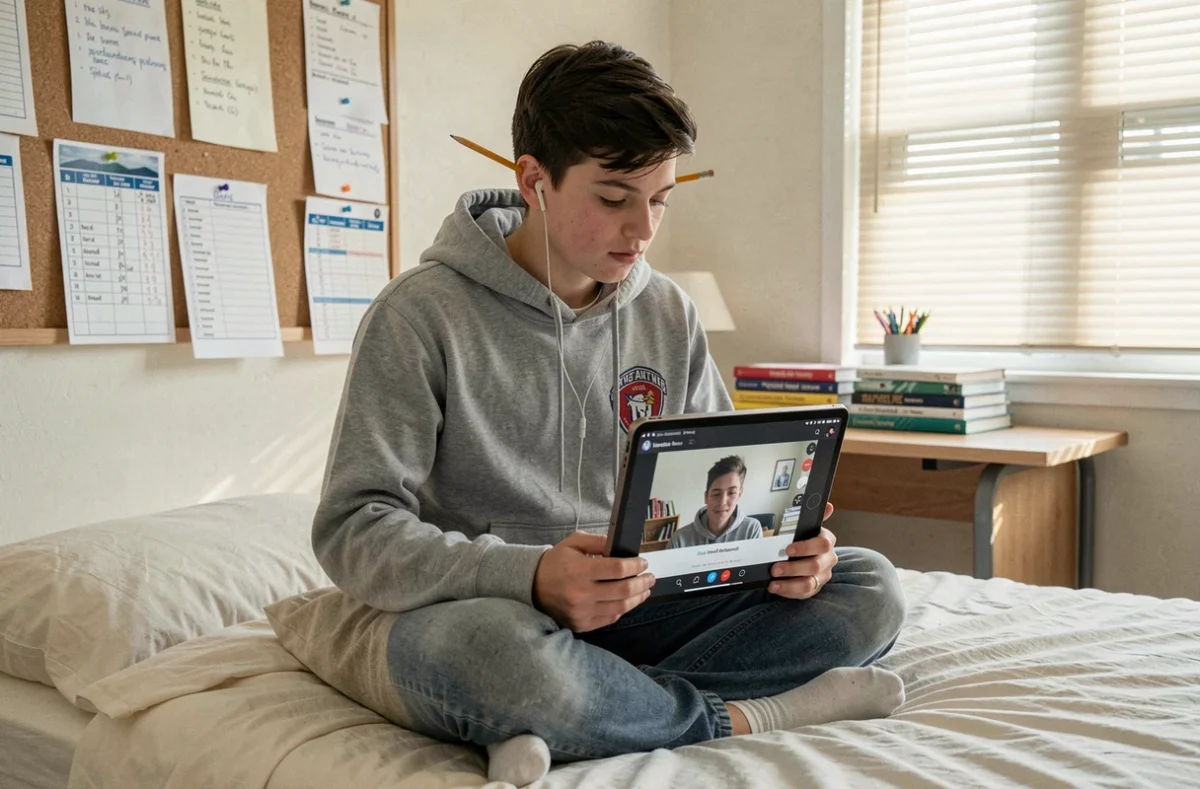
Regional disparities in online tutoring uptake
London households account for a disproportionate share of private tutoring spend, a pattern sometimes called the “London effect.” Online platforms were expected to flatten this imbalance by connecting students outside the capital with high-quality tutors. The evidence so far suggests the correction is partial at best.
Broadband infrastructure, disposable income and cultural attitudes to supplementary education all vary by region. A platform available nationwide is not the same as a platform used nationwide. Regional tutoring gaps have not closed simply because the service moved online.
For policymakers and school leaders, the implication is that technology alone does not solve an access problem rooted in economics. Any serious evaluation of online tutoring’s role in UK education needs to account for who is actually using these services, not just who theoretically could.
The online tutoring market in the UK has grown rapidly since the end of the National Tutoring Programme, and platforms now offer genuine breadth of subject coverage and tutor availability. Whether that breadth converts into measurable educational improvement for the pupils who need it most remains an open question, and one that neither platforms nor government have yet answered with published data.