


A developer secures planning consent, lines up financing, and then waits years for a grid connection date. That bottleneck now shapes which renewable energy projects in the United Kingdom actually reach operation, and which stall indefinitely. For anyone weighing renewable energy investments in the UK, understanding grid access risk is essential to distinguishing a viable project from a stranded one.
Grid connection reform and what it means for UK renewable energy investment
Great Britain has moved away from a largely first-come, first-served connections queue towards a “first ready and needed” approach. In practice, this means a project’s planning progress, land rights and financing status now determine whether it keeps a viable connection pathway.
Further reading: Brexit aftermath: economic implications for UK businesses in 2026
That shift changes the investment calculus. A wind farm with full consents and secured land sits higher in the queue than a speculative application filed years earlier. For investors, due diligence on grid readiness now matters as much as site yield.
The queue itself remains vast. Projects without a credible route to energisation carry real stranding risk, and that risk is not always priced into early-stage valuations.
Further reading: Innovation in British agriculture: the rise of sustainable farming practices
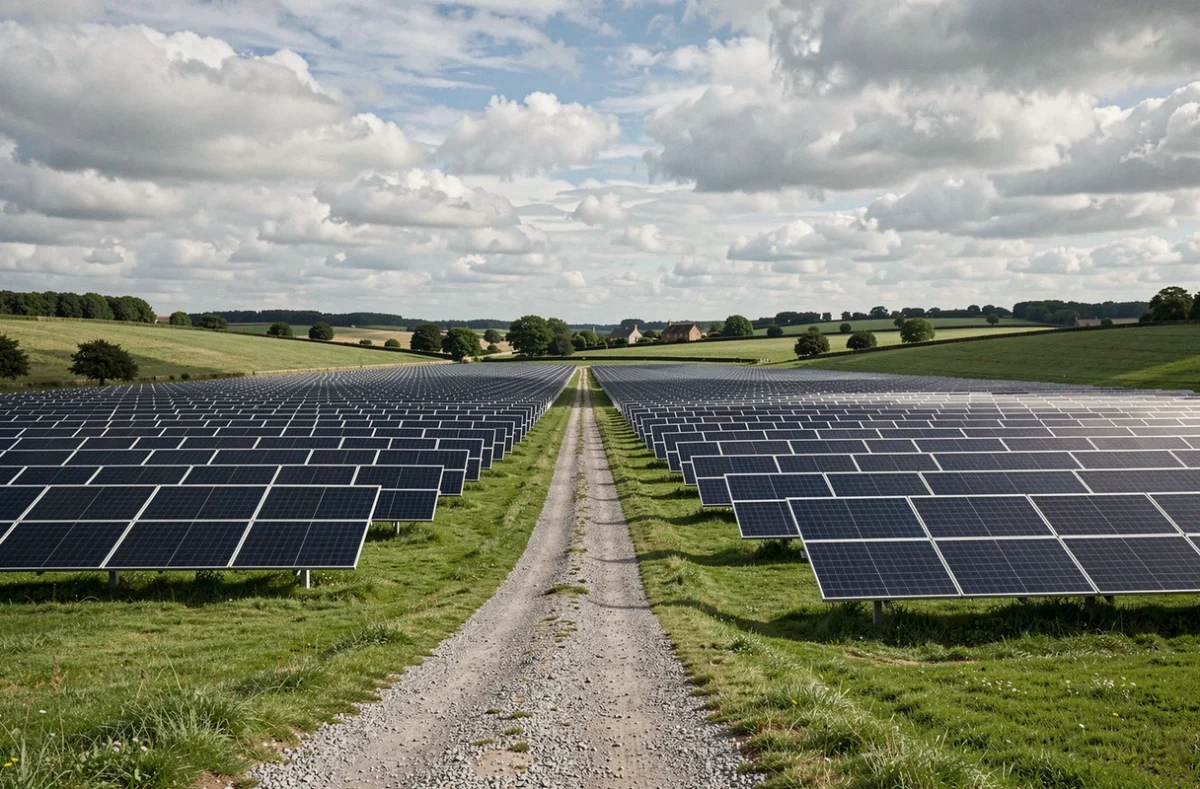
Wind curtailment: a revenue risk investors cannot ignore
Offshore wind dominates the UK renewable energy pipeline, and the Contracts for Difference (CfD) scheme provides a degree of revenue certainty. But output certainty is a different matter entirely.
UK wind curtailment has risen sharply over recent years, and the trend shows no sign of reversing. When turbines spin but the grid cannot absorb the power, that electricity is effectively wasted. The cost falls partly on consumers through constraint payments, and partly on project economics where compensation is incomplete.
For a fund holding operational wind assets, curtailment directly erodes the volume of electricity sold. It also introduces uncertainty into financial models built on assumed load factors. Two wind farms of identical capacity in different grid zones can deliver materially different revenues, purely because of local transmission constraints.
- Transmission bottlenecks between Scotland and England remain a primary cause of curtailment for onshore and offshore wind in northern regions.
- New interconnectors and transmission reinforcements are planned, but construction timelines stretch well into the early 2030s.
- Battery storage co-located with wind farms can capture some curtailed energy, but the economics depend on local grid conditions and storage duration.
The takeaway for investors: generation capacity alone does not equal generation revenue. Curtailment exposure should sit alongside yield estimates in any project appraisal.
Flexibility and storage as the next UK energy investment frontier
Generation targets dominate public discussion – gigawatts of offshore wind, solar capacity additions. The infrastructure that makes intermittent generation usable is where growing capital is now flowing, driven by tangible project economics.
Battery energy storage systems (BESS) are attracting growing capital. Grid-scale batteries earn revenue from multiple streams: frequency response, wholesale arbitrage, and capacity market contracts. As curtailment rises, co-located storage becomes more attractive because it can absorb power that would otherwise be constrained off.
Vehicle-to-grid (V2G) technology adds another layer. As the UK’s electric vehicle fleet grows, each parked EV becomes a potential grid asset – discharging stored energy during peak demand and recharging when supply is abundant. The commercial models are still maturing, but the direction of travel is clear.
Flexibility assets sit at the intersection of grid constraint and policy ambition. The government’s decision to retain a single national electricity price, rather than introduce zonal pricing, means local grid constraints persist even though wholesale price signals remain uniform. That creates opportunities for assets that can physically manage local imbalances, particularly storage and demand-side response.
What flexibility investment looks like in practice
A typical BESS project today involves securing a grid connection (subject to the same queue pressures as generation), negotiating revenue-stacking contracts, and managing degradation over a battery’s operational life. Returns depend heavily on how frequently the battery cycles and at what spread.
For institutional investors, the appeal lies in contracted revenue floors combined with merchant upside from trading. The risk sits in technology evolution – longer-duration storage chemistries could reshape the competitive landscape within a decade.
Policy signals and the UK renewable energy market outlook
The UK’s net-zero commitment and CfD framework provide a baseline of policy support that most renewable energy markets lack. CfD strike prices give developers guaranteed revenue per megawatt-hour, reducing wholesale price exposure. That mechanism has been instrumental in driving down the cost of offshore wind over successive auction rounds.
Several policy dimensions matter for near-term investment decisions:
- The retained single national price avoids the complexity of zonal markets but does not resolve physical transmission constraints, which remain a project-level risk.
- Planning reform and grid connection reform are running in parallel, with the aim of accelerating deployment timescales. Progress on both fronts varies.
- Data centre demand is growing rapidly in the UK, creating a new category of large-scale electricity consumer that could underpin long-term power purchase agreements for renewable generators.
- The solar segment is expected to grow at a notable rate, driven by falling panel costs and increasing commercial rooftop adoption.

Where the real constraint lies
Capital is no longer the binding constraint for UK renewables – grid access is. Octopus Energy’s reported commitment of 2 billion in UK renewable energy underscores that private capital is available at scale. The challenge is converting that capital into connected, generating assets within a reasonable timeframe.
For investors assessing this market, the differentiation increasingly lies not in identifying attractive technologies (offshore wind and solar are well understood), but in selecting projects with credible grid connection timelines and manageable curtailment exposure. A well-connected 50 MW solar farm can outperform a 200 MW wind project stuck in a connection queue for years.
The UK renewable energy opportunity is large and growing. Grid access, curtailment risk and flexibility infrastructure are now the factors that determine which projects deliver returns and which remain on paper.