

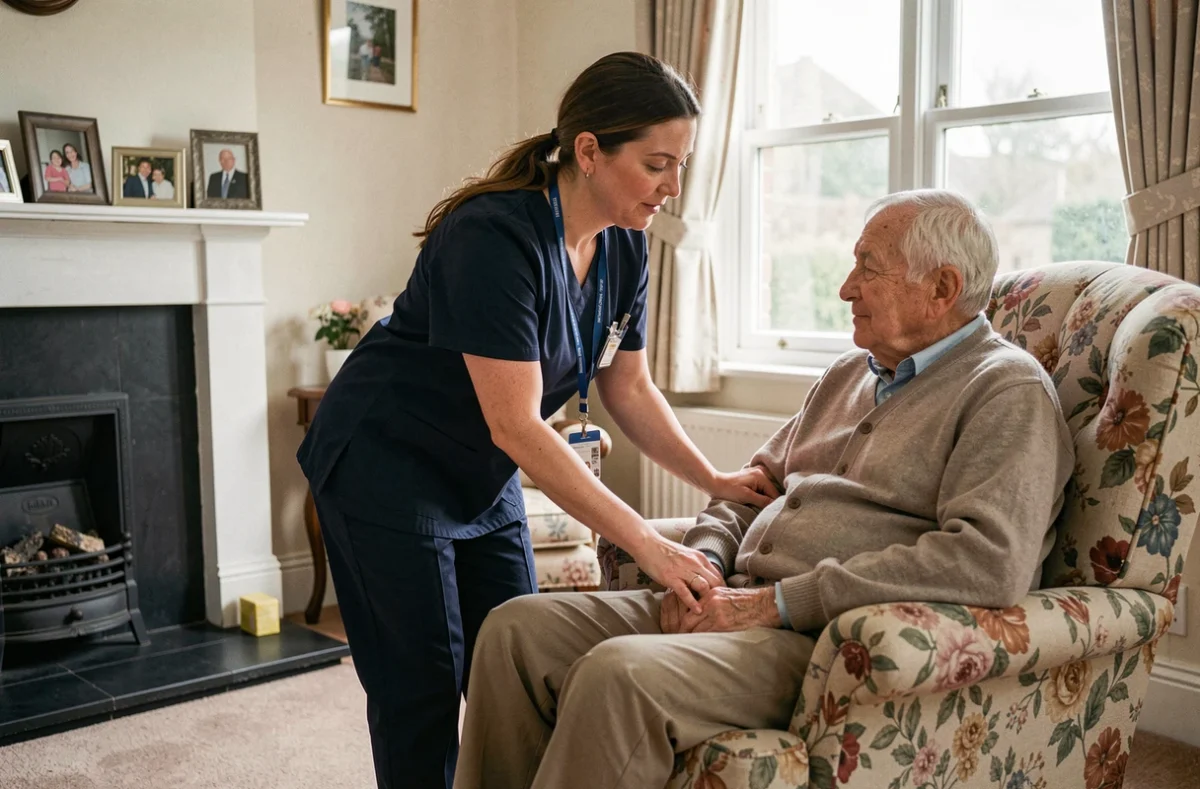
Home care in the United Kingdom refers to regulated personal assistance, nursing support, or domestic help delivered inside a person’s own residence rather than in a hospital or care home. The sector has expanded steadily, and the forces behind that growth, an ageing population, tighter hospital capacity, and shifting government policy, are intensifying as 2026 unfolds.
What “fully digitised” means for home care providers in 2026
Most coverage of technology in domiciliary care focuses on which tools agencies use. A more immediate question is what the government now expects providers to prove about their digital systems.
Read also: Online tutoring services in the UK: The new face of education in 2026
In guidance published on 29 September 2026, the Department of Health and Social Care defined a fully digitised care provider as one using an assured digital social care record and meeting the required level of the Data Security and Protection Toolkit. This is not yet a penalty-backed requirement: a provider will not automatically receive a lower CQC rating for lacking digital records.
The direction of travel is clear, though. Commissioners and inspectors may increasingly look for evidence that records are secure, structured, and usable. For smaller agencies still running paper-based care plans, the gap between current practice and the government’s benchmark is widening.
Read also: Financial services in the UK: Ensuring your business thrives in 2026
Birdie’s 2026 survey of 122 homecare providers found that seven in ten were already using some form of AI, with the majority having started before 2025. The most common tools were general-purpose assistants (ChatGPT, Microsoft Copilot, Google Gemini) rather than care-specific software. Only about three in ten used AI built into their care management platform.
That distinction matters. General AI tools sit outside the care record, which raises governance questions that many agencies have not formally addressed. The CQC’s first public statement on AI in care settings signals that regulators expect providers to document how automated tools interact with sensitive data, even when those tools were adopted informally.
Home care workforce after the overseas recruitment ban
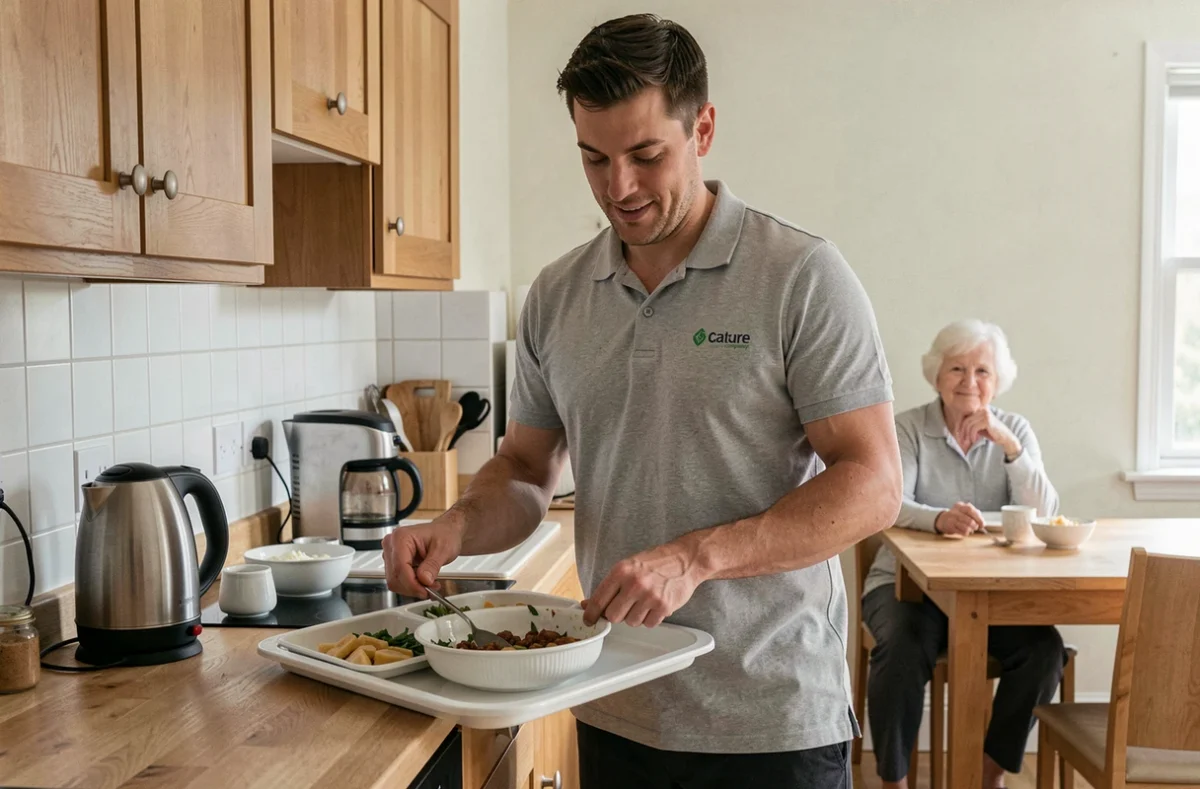
Direct overseas recruitment into care-worker roles ended in July 2025. Transitional arrangements allow some workers already in the country to move into sponsored positions until July 2028, but the window is finite.
The Homecare Association surveyed 108 providers in January 2026. The findings were blunt:
- Nearly half of responding providers expected to hand back care packages or reduce services if uncertainty over settlement led sponsored staff to leave the sector.
- Providers described a tension between local authority commissioning rates and the actual cost of employing, training, and retaining staff at a level that meets CQC quality standards.
- Several respondents flagged that the loss of experienced overseas carers would affect continuity of care for people with complex needs, not just total capacity.
This is a single association’s survey, not a census of the whole market. It does, however, illustrate a concrete pressure point: immigration policy is now a workforce planning variable that providers must factor into their capacity forecasts.
Wage pressure from a shrinking labour pool is one reason costs keep climbing across the sector.
CQC oversight and quality ratings for domiciliary care
Understanding how quality is measured helps explain why certain providers struggle and others thrive. The CQC assesses services against five key questions: safe, effective, caring, responsive, and well-led. Ratings range from outstanding to inadequate.
The regulator’s 2025-26 State of Care reporting period has drawn attention to a persistent split. A large share of domiciliary care services receive “good” ratings, but a meaningful minority remain “requires improvement” or worse, often linked to staffing shortfalls, poor record-keeping, or inconsistent medication management.
Regulatory reporting and emerging policy signals
The social care blog published by the Department of Health and Social Care in October 2026 outlined plans for a national care service framework and a workforce action plan. Details remain thin, but the language around “free personal care” and workforce standards suggests that the regulatory environment will tighten rather than loosen over the next few years.
Home care funding and the growing cost gap
Local authority commissioning rates vary widely across England. Some councils pay rates that barely cover the minimum wage plus travel time, leaving providers to choose between financial viability and quality of care.
The gap between what home care costs to deliver and what commissioners pay is not new. What has changed is the number of variables compounding the pressure simultaneously:
- Wage inflation driven by a smaller available workforce after the overseas recruitment restrictions.
- Digital compliance costs as providers invest in assured record systems and data security toolkits.
- Rising insurance and training expenses linked to more complex care needs being managed outside hospitals.
- The cost of CQC registration and ongoing regulatory reporting, which scales with the breadth of services offered.
Clinical home care already saves the NHS around £1.6 billion a year, equivalent to over 1.5 million bed days according to a 2025 report by the Association of the British Pharmaceutical Industry. That saving depends on a domiciliary sector that can absorb growing demand without collapsing under its own cost base.
The Office for National Statistics projects that the over-65 population will rise from roughly 19% to 27% of the UK total over the next fifty years. Every percentage point of that shift translates into additional demand for home-based support.
Whether the funding, workforce, and regulatory structures in place by 2026 can scale to meet that demand is the question that defines this sector’s next decade. The answer, for now, depends less on technology than on what commissioners are willing to pay for each hour of care delivered at someone’s front door.