

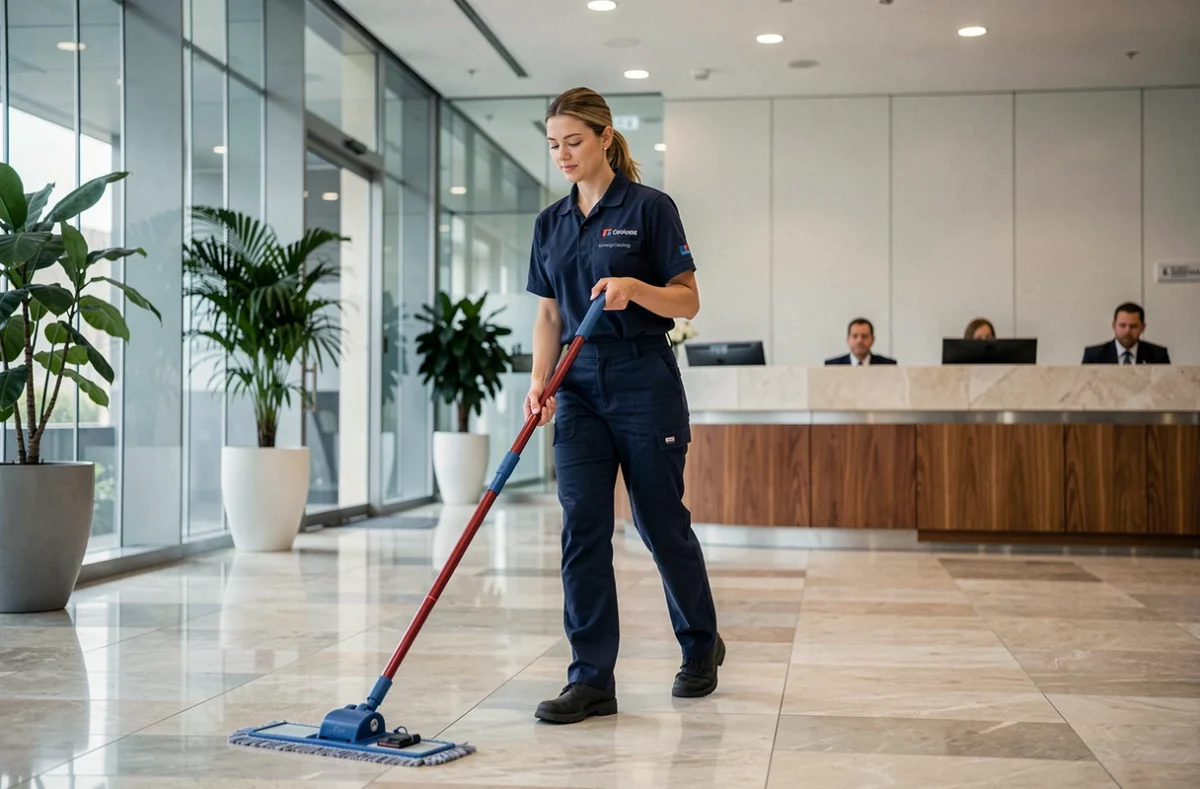
Professional cleaning in the United Kingdom refers to any paid service that maintains or restores hygiene in residential, commercial, or public spaces. The sector spans office cleaning, window cleaning, specialist hygiene, waste management, and facilities support. According to the British Cleaning Council’s 2025 Research Report, the broader cleaning, hygiene and waste industry has reached a record valuation of £66.9 billion, making it one of the country’s largest employment sectors.
COSHH compliance and chemical exposure in cleaning contracts
One dimension rarely unpacked in industry overviews is the regulatory burden around substances used on the job. Under the Control of Substances Hazardous to Health (COSHH) framework, every employer in Great Britain must assess risks from hazardous products their staff handle, including cleaning chemicals, and either prevent or adequately control exposure.
Further reading: Innovative marketing services transforming UK businesses
This goes beyond choosing an eco-friendly detergent. A COSHH assessment documents each product, its hazard classification, the tasks in which it is used, and the control measures in place. For cleaning businesses operating across multiple client sites, that means a separate risk profile for every contract environment.
The practical consequence is cost. Smaller operators must invest in training, personal protective equipment, and documentation systems that larger facilities management firms absorb more easily. HSE guidance also stresses cooperation between the cleaning contractor and the client, particularly when both parties’ employees share the same workspace. Ambiguity over who supplies ventilation, storage, or spill kits can create compliance gaps that neither side notices until an inspection.
See also: Legal services trends in the United Kingdom for 2026

Workplace recycling rules and their impact on commercial cleaning
England’s simulated workplace recycling requirements have introduced a tangible operational change for cleaning providers. Businesses must now separate specific waste streams, which means cleaning crews coordinate bin layouts, collection schedules, and staff instructions with each client.
Micro-firms benefit from a temporary exemption running until 31 March 2027, but every other commercial premises is already in scope. For a cleaning company servicing dozens of offices, this translates into bespoke waste-handling procedures per site rather than a single standardised routine.
What this means for contract pricing
Additional sorting obligations extend the time operatives spend on each shift. Contracts negotiated before these rules came into force may no longer reflect the real labour cost. Cleaning businesses that fail to renegotiate risk absorbing the difference, while those that price it transparently can position compliance support as a value-added service.
These are England-specific rules. Scotland, Wales, and Northern Ireland each maintain separate waste and recycling frameworks, so companies operating across UK nations need distinct procedures for each jurisdiction.
Employment law reform and cleaning workforce planning
The British Cleaning Council flagged proposed employment-rights reforms in September 2026, noting that implementation was expected in 2027 with details still under consideration. The reforms could affect how cleaning contractors manage variable workloads, particularly around zero-hours contracts that much of the sector relies upon.
Cleaning is labour-intensive and demand fluctuates. A corporate client may need five operatives during a refit and two during normal operations. Flexible contracts have historically allowed providers to scale crews without carrying fixed payroll costs. If new legislation restricts that flexibility, the pricing model for the entire industry shifts.
Apprenticeships as a recruitment lever
Labour shortages since Brexit have squeezed the available workforce. In response, a Cleaning Hygiene Operative Apprenticeship was launched to create a recognised, work-related qualification. The apprenticeship route addresses two problems at once: it brings new entrants into a sector with persistently high vacancy rates, and it establishes a formal skills baseline that clients can verify.
For businesses bidding on public-sector contracts, demonstrable investment in training and workforce development strengthens a tender submission, particularly under the social-value criteria that many public buyers now weight heavily.
Public-sector procurement routes for cleaning services
Winning public-sector cleaning work in the UK now involves navigating more than one procurement framework. England and Wales operate under new procurement legislation, while Scotland retains its own separate regime. The applicable tender process and platform depend on the nation where the contract will be delivered.
- Cleaning suppliers must identify which framework applies before investing time in a bid, because the evaluation criteria, timelines, and documentation requirements differ between jurisdictions.
- Sub-contracting arrangements face additional scrutiny under newer rules, so smaller firms partnering with larger contractors need clear, auditable agreements.
- Social-value weighting in public tenders rewards companies that can evidence local hiring, environmental commitments, or community engagement, not just the lowest price per square metre.
This fragmented landscape favours cleaning businesses that invest in dedicated bid management. A technically excellent service means little if the submission fails on procedural compliance.
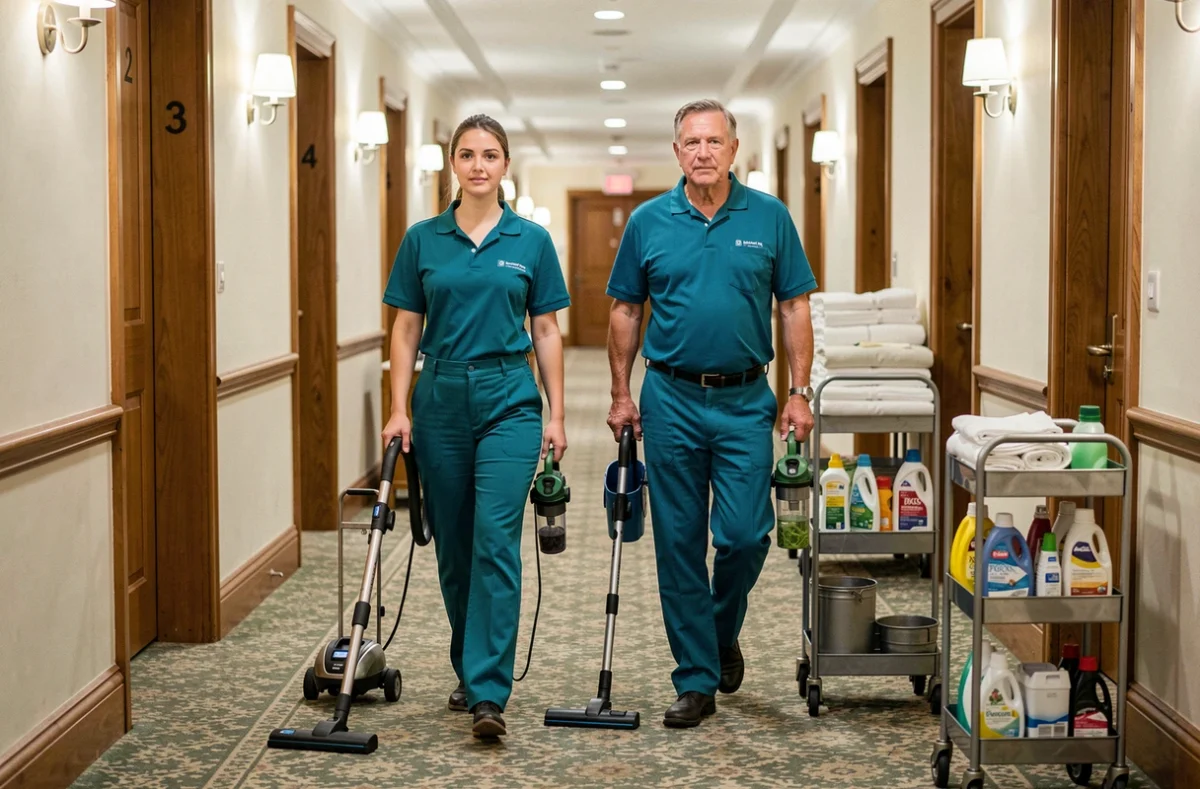
Technology adoption and the shift in customer expectations
App-based booking for domestic cleaning has grown noticeably among younger demographics. The convenience of scheduling, paying, and reviewing a cleaner through a single platform has normalised professional home cleaning for a generation that might not have considered it previously.
On the commercial side, technology adoption looks different. Sensor-driven monitoring, automated scheduling software, and digital audit trails allow facilities managers to verify that cleaning has been completed to specification. The data these systems produce also feeds into contract compliance reporting, giving clients measurable evidence rather than visual spot-checks.
- Robotic floor-scrubbers and autonomous vacuums handle repetitive tasks in large, open-plan spaces such as warehouses and retail floors.
- IoT-connected dispensers track soap, sanitiser, and paper-towel usage, triggering restocking before supplies run out.
- Digital time-and-attendance platforms reduce payroll disputes and give contractors real-time visibility of operative deployment.
None of this replaces the operative with a mop. The sector’s growth is not a story of automation displacing workers but of technology raising the standard clients expect from a cleaning contract. Businesses that treat tech as a reporting and efficiency layer, rather than a labour substitute, are better placed to retain contracts when renewal negotiations arrive.
The UK cleaning industry sits at an intersection of regulatory tightening, workforce reform, and rising client expectations. Compliance with COSHH, waste rules, and evolving employment law now shapes operational costs as much as the price of equipment or chemicals. For cleaning businesses, the commercial opportunity is large, but so is the administrative overhead required to capture it.